When people talk about controversial emojis, they usually think of:
- the finger-pinch emoji
U+1F90F(🤏) that was at the center of anti-feminist conspiracy theories alleging it’s use for body-shaming men. - the water gun emoji
U+1F52B(🔫) which replaced the revolver emoji following US school shootings - the pregnant man, pregnant person emoji
U+1FAC3U+1FAC4(🫃 🫄) which are used to represent pregnancy in gender non-binary individuals
One controversial emoji that usually doesn’t get talked about enough is U+1F1F9 U+1F1FC. While the controversy around the emojis above is mainly driven by cuture war, the controversy around U+1F1F9 U+1F1FC stems from geopolitics, history and restistance. We could approach this controversy from a multitude of different angles, including denial of national identity, Sinocentrism or just plain bad takes.
Today I want to broach this subject from a completely different one though, one that doesn’t get much limelight.
What is U+1F1F9 U+1F1FC
U+1F1F9 U+1F1FC, is a multi-character emoji made up of U+1F1F9 (🇹) and U+1F1FC (🇼). It represents the “Blue Sky, White Sun, and a Wholly Red Earth” (青天白日滿地紅) flag, more commonly known as the Flag of the Republic of China. It is also the emoji that is commonly used to represent Taiwan.
The symbolism of this flag is multifaceted, representing the twelve months of the year, the twelve 時辰 of the day, as well as Chinese nationalism, and the blood of the revolutionaries that fought against the Qing Dynasty.
The flag was adopted by the KMT in their revolutionary struggle against Qing China, as well as the struggle against Yuan Shikai’s Beiyang Government. The 12-pointed star on a blue canton is still used by the KMT today as their party’s emblem.
On one hand, this flag stands for some principles that I agree with: independence, equality, democracy, and fraternity. On the other, though, it also stands against communism, and was the flag under which the KMT massacred more than 10,000 communists and labour unionists in many public executions, such as the Shanghai Massacre (四一二事件) 1, as well as other public executions in Changsha.
How did it get to represent Taiwan then?
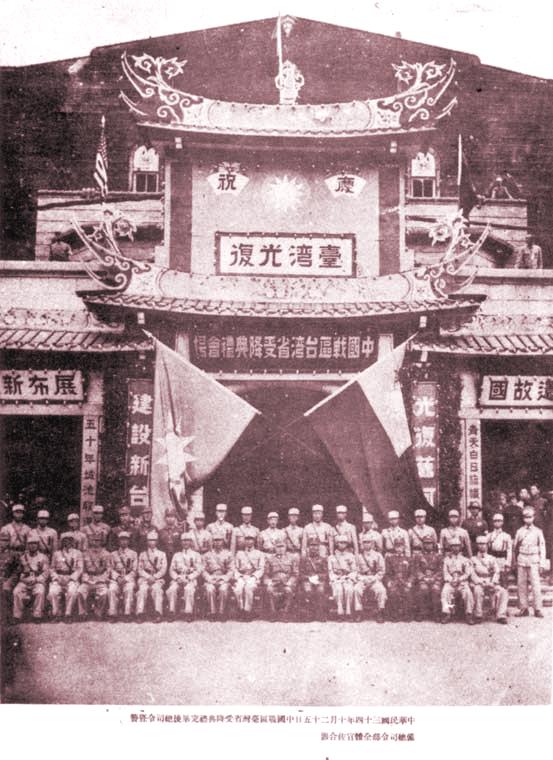
Following Japan’s surrender in World War II, the Allies decided to place Taiwan and the Pescadores (modern day Penghu) under ROC-administration2. Fleeing China to Taiwan, Chiang, the KMT and the National Revolutionary Army brought the “Blue Sky, White Sun, and a Wholly Red Earth” flag with them, justifying their occupation of Taiwan under the pretext of Taiwan’s retrocession to the ROC. Even though the treaties signed by Japan mention nothing about sovereignty over Taiwan, this pretext of Taiwan’s retrocession (臺灣光復) was used by Chiang and the KMT to rule the island with an iron fist, resulting in the longest continuous period of martial law in human history (at the time)
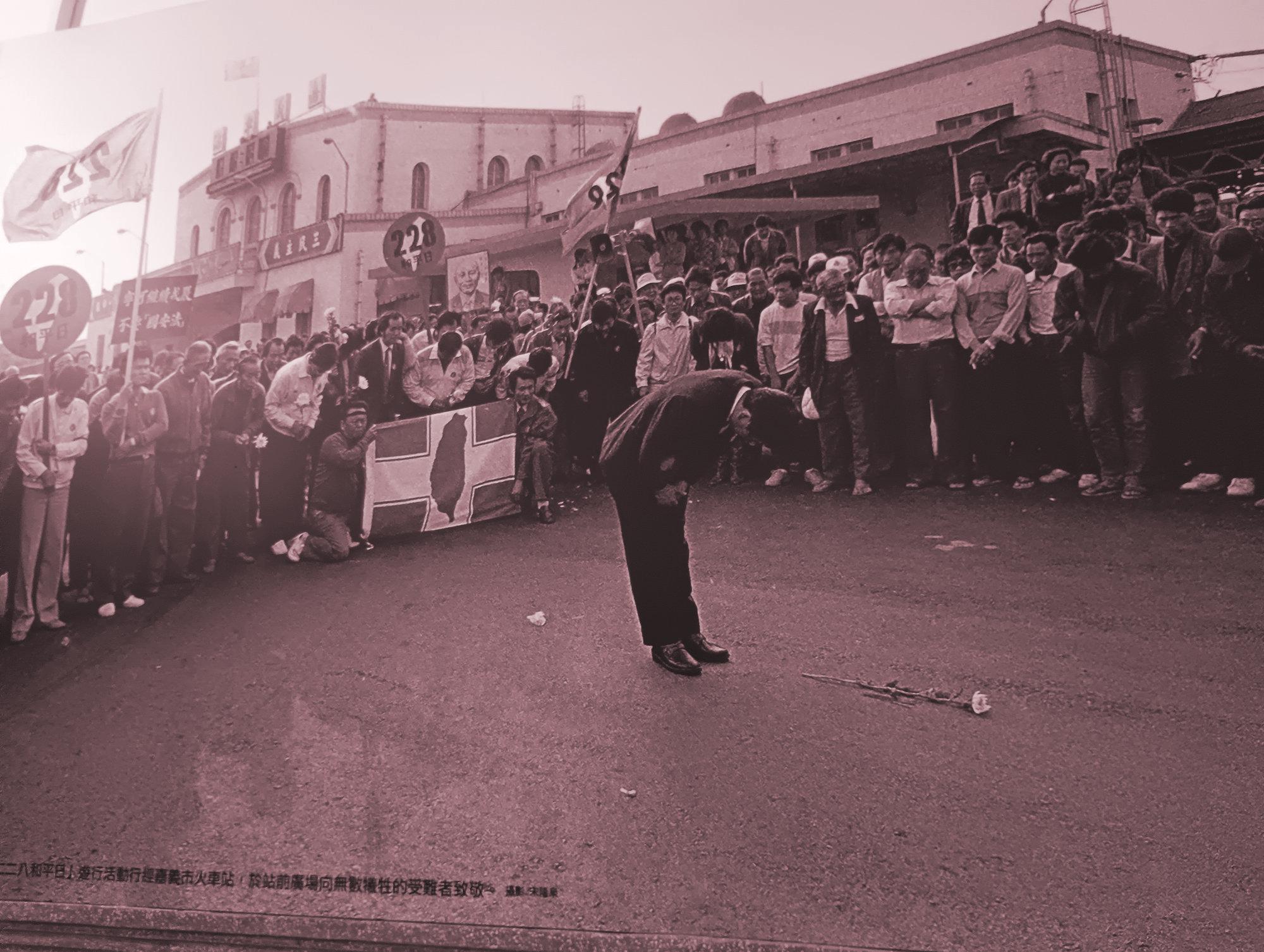
Under the flag of the ROC, hundreds of thousands of Taiwanese were imprisoned under harsh treatment, either indirectly dying or suffering various health problems in the process. About 3,000 to 4,000 were directly executed for their real or perceived opposition to Chiang’s government, including advocates for Taiwanese Independence.
This flag also represents a supposed continuation of the Chinese ideals and values in Taiwan, as well as the suppression of local Taiwanese and indigenous language and culture. Under the KMT policy, local and indigenous languages were deemed illegal. People speaking languages besides Mandarin were seen as “primitive”, while local culture and customs were seen as “unpatriotic”3 and in need of eradication.
Ironically, it is only through this flag, and the civil war framework, that the PRC can build a coherent narrative as to why it deserves sovereignty over Taiwan. Following the PRC’s claim, given that the ROC claims sovereignty over Taiwan, and the ROC has lost the Civil War to the PRC, it follows that Taiwan should now be part of the PRC, through the mechanism of the Succession of States. This argument’s whole assumption is that the ROC has sovereignty over Taiwan, irrespective of the fact that Taiwan has never been part of the ROC since it’s inception in 1912, or that the ROC has never had sovereignty over Taiwan.
To conclude… what does U+1F1F9 U+1F1FC render to then?
Well, this: 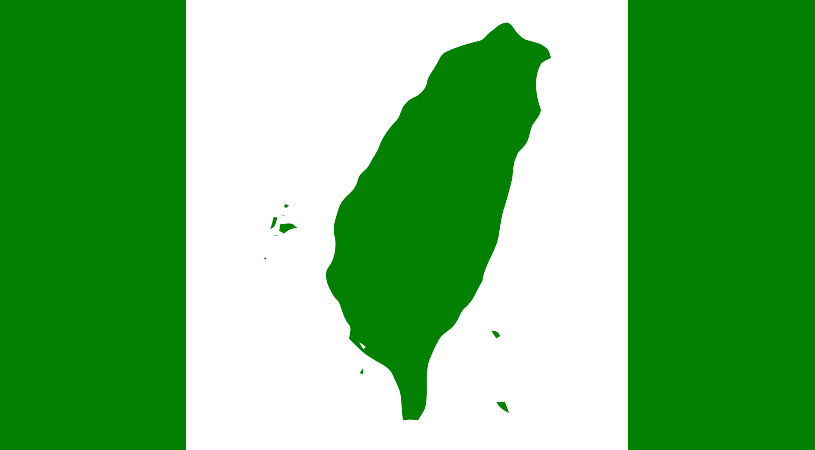 . Maybe one day I’ll write about the symbolism of this flag too. That day is not today though.
To close, I’m not here to make a moral judgement about the flag that Taiwanese want to identify with, that’s their call. However, I do think that, to many outsiders looking inwards at Taiwan, associating Taiwan with the Flag of the ROC is their default mode.
This is not to say that you need to stop using the Flag of the ROC when referring to Taiwan. This blog serves merely as a thought exercise in symbolism and associations. My intention is not to change your mind, but to put in perspective the meaning of the imagery and symbols you choose to attach to your statements related to Taiwan.
Treaty of San Francisco - United Nations Treaty Collection (PDF) ↩︎
Taiwan Language-In-Education Policy: Social, Cultural and Practical Implications - Arizona Working Papers in SLA & Teaching ↩︎